-
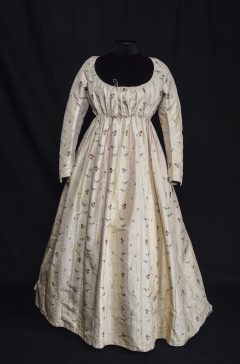
-
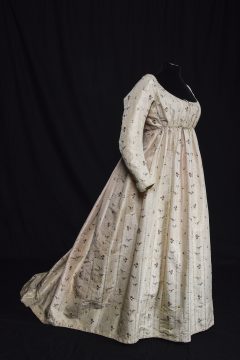
The dress seen from the side. -
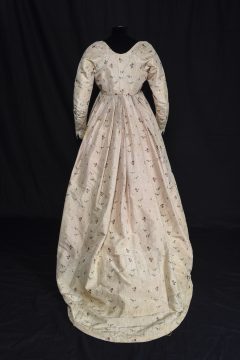
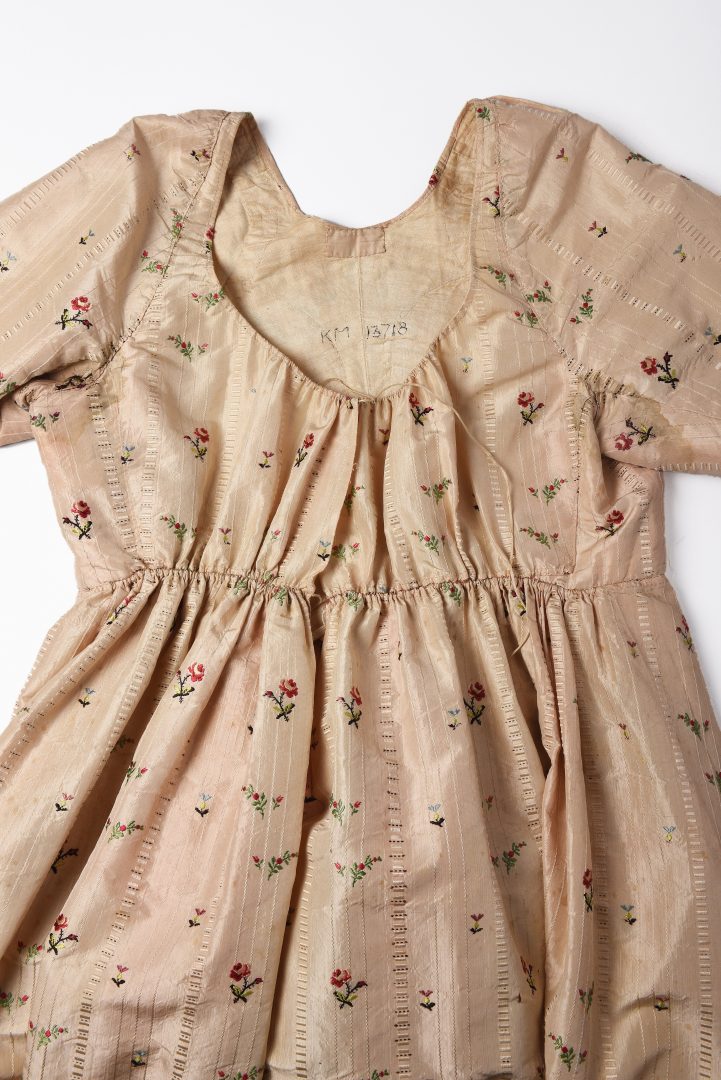
The dress seen from behind. -
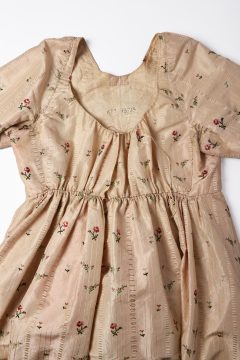
The dress is fastened with drawstring. -
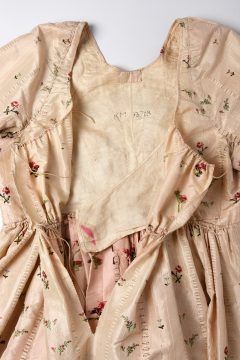
The bodice of the dress is lined with linen. -

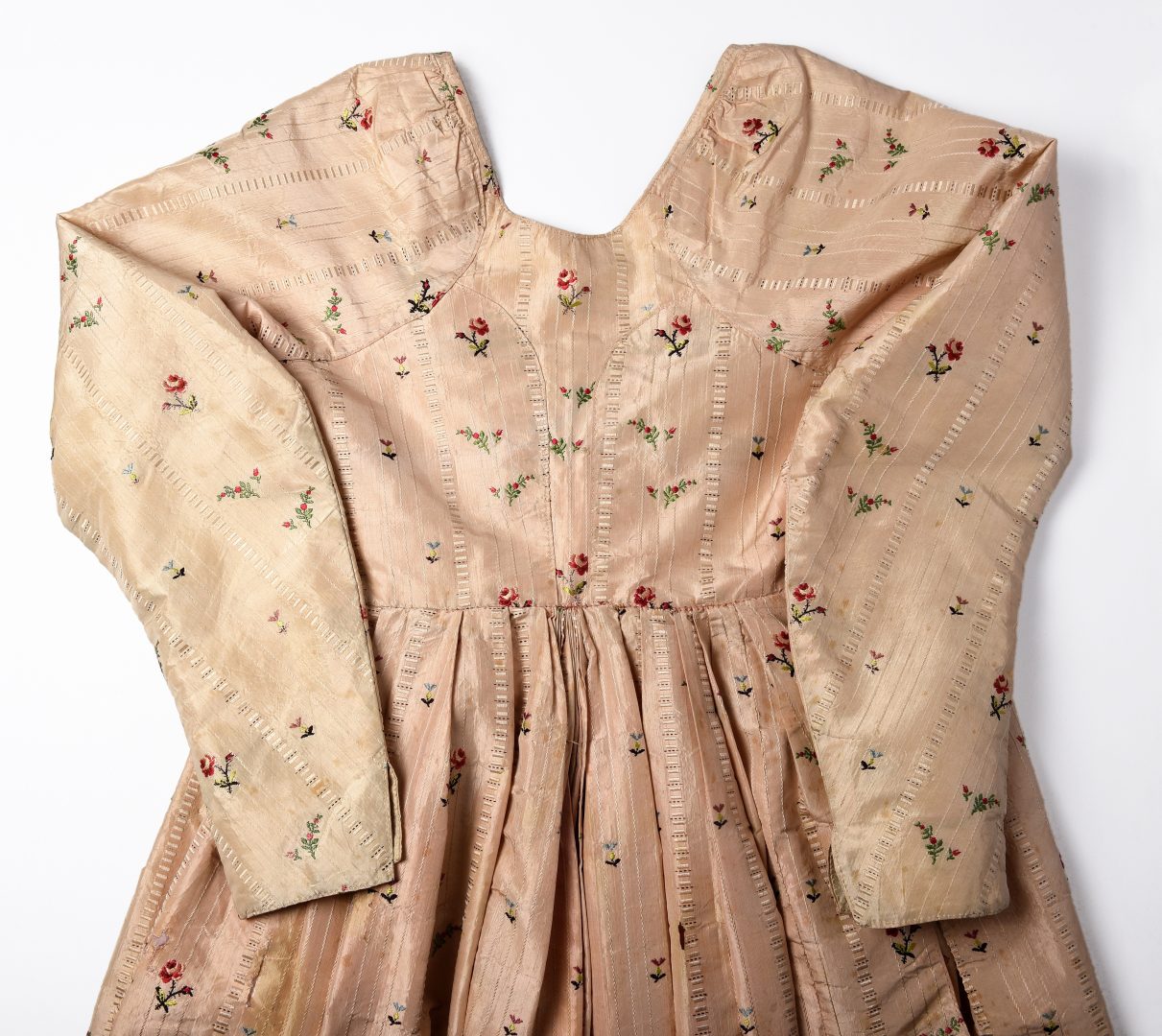
The dress seen from behind. It was altered in the 1790s.

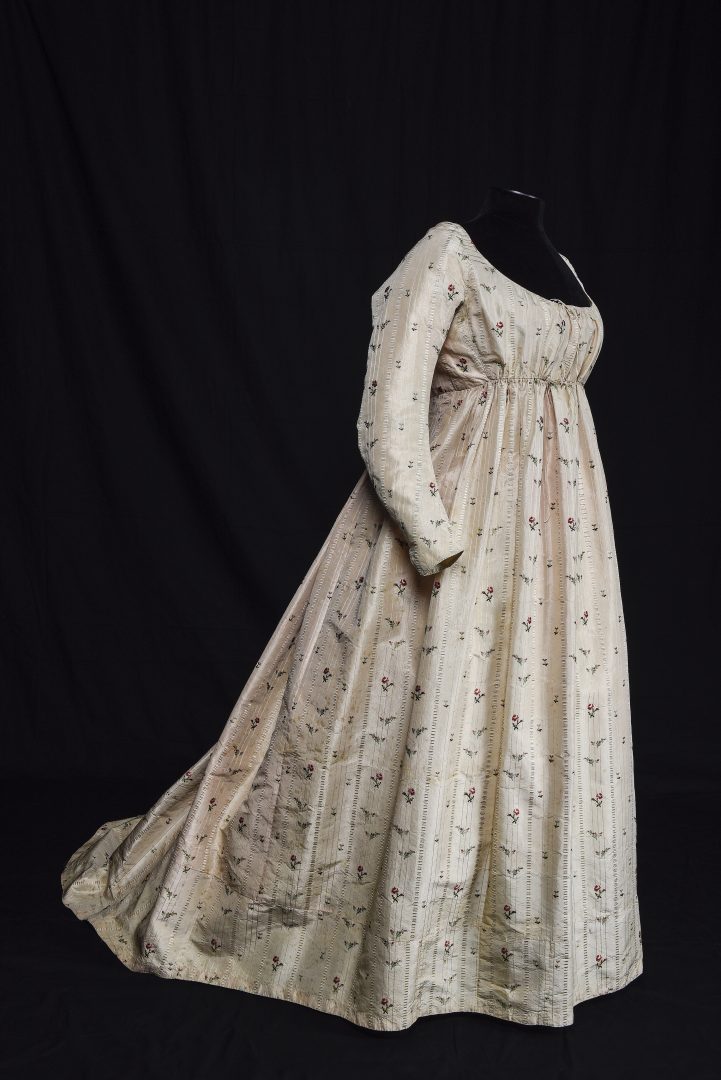


Dress, 1790s
The mid-18th century saw the discovery of Pompeii and Herculaneum, the Italian cities that had been buried by ashes following the eruption of Mt Vesuvius in the year 79 AD. The discovery brought about a neoclassical trend when it came to architecture, interiors and fashion.
This dress can be seen as a transition from the wide skirt and emphasised derriere of the 1790s to the column shape and marked bust of the coming Empire style fashion.
The dress is made from pink silk brocade with stripes and flowers woven into the fabric. The bodice and the skirt are sewn together. The bodice, which is lined with linen fabric, is ruched in front and held together by drawstrings. The dress has long, curved sleeves and a skirt with a train. It has been altered in order to reuse the valuable fabric.
Material
Silk, linen
Length
Middle of front: 120 cm
Technique
Brocade
Inventory number
KM 13718